
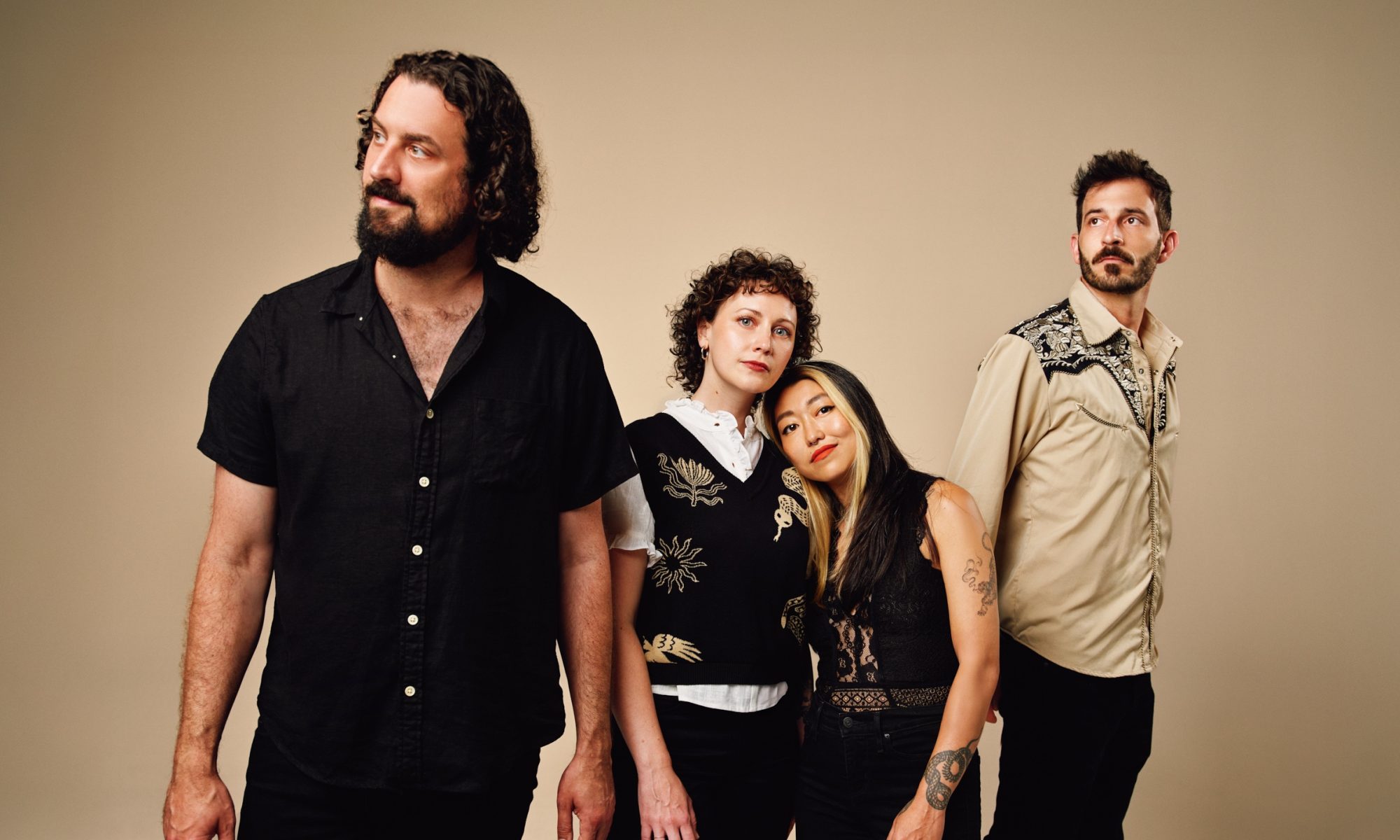
UCR Interview • Emilee Petersmark & Kate Pillsbury of The Crane Wives
After an expansive run of 2025 tour dates, indie rock band The Crane Wives (1.3m Spotify monthly listeners, 763.5k TikTok likes) are showing no signs of slowing down. The Crane Wives will bring their dynamic live show back to stages nationwide, delighting audiences in cities including Los Angeles, Portland, Houston, Seattle, San Francisco, San Diego, and beyond. They will be here in Salt Lake City on Friday, June 26th, at The Complex.
We had the opportunity to catch up with Emilee Petersmark and Kate Pillsbury of The Crane Wives on a tour stop in Portland, leading up to their second visit to Salt Lake City. They were so fun to talk to, and there is no doubt that their show is going to be amazing. Enjoy!
Interviewed by Kevin Rolfe
Utah Concert Review: Do you remember the first concert you guys went to?
Emilee Petersmark: Oh my god, yes. Michelle Branch.
Kate Pillsbury: I think the first concert that I really wanted to go to, that wasn’t like a, like, a local festival thing that we had in our town, was actually Sugar Cole, also in Detroit at Clutch Cargo.Â
UCR: Do you pull from the experience of your first concert, and maybe understanding that a lot of people, this is their first concert, try to make it as genuine and authentic and real for them in that moment? Is that in the back of your mind, or is it hard to think that much into it, and you’re just playing to a huge mass of people?
Emilee: I feel like I am so aware that this is like somebody’s first show, every show is somebody’s first show at this point, and I want it to be a better experience than what I had, you know, growing up. I loved the opportunity to see so much music in Detroit, growing up on the East side of the state, but those concerts, you know, sometimes you were the youngest person there, you were, you know, alone and not super safe.
So one of the things that I find very exciting with our shows is that the fans, some of the feedback that we’ve gotten from venues is just like our fans are the nicest people in the world, you know, no one leaves trash behind, people are really considerate, so I feel like we got really lucky and being able, like, we haven’t done anything to curate that, they’ve just done that themselves, but yeah, it’s always in the back of my mind just thinking about, like, what their first experience will be with us performing. We want to be, you know, as real as we can be, so that they know that, like, a real person can do this job. It’s not just, you know, industry plants.
UCR:Â Yeah, because as a young person, you see that, and you think you have no idea how they got there. They’re there on the stage, and that seems like an impossible dream, almost. But you guys are a living reality that it can happen, so that’s cool that you set that tone.Â
Do you remember your first time performing live?
Kate: I remember my first gig was also through high school, and it was like this. It was the senior all-night party. I was a junior. I had a half-hour set. And that was a big step up from like playing one song at the talent show, and I did not memorize the music well enough to be able to do it well. I think I traumatized myself by, like, you know, performing in front of all the cool seniors, and then botching every single song, and I remember I went home the next day, and I had like, a crisis, or, just a complete social or identity crisis, in which I was like, I’m not capable of doing this, and I was like 17, and I’m like, my dreams are over, I can’t do this. Â
My dad and my mom kind of picked me up, and they let me feel my feelings about it, and then I just couldn’t stop playing music, and I think going to college and being at Grand Valley, where we all met, there were like a lot of opportunities to perform on campus. And then that led to like meeting other musicians, and then booking shows at the local venues, and yeah, it’s just kind of sort of rolled into more of a career.
Emilee: It stops being, well, I mean, it doesn’t stop being scary, but it is easier to handle the mistakes and the missteps when you’re doing it all the time. I think it helps a lot.Â
My first memory of, like, actually doing a band thing, like performing my, like, art music that I helped write. I played a battle of the bands with my ska band in high school, and I actually played that battle of the bands with our bass player, Ben Zito’s band. We went to two different high schools, we were in two different ska bands, we both lost that battle of the bands, but it was a lot of fun, and a really good experience. And yeah, it’s, it’s scary, it’s definitely very scary, but it is very addicting as well.
UCR: No doubt about it. So I know I’m kind of going back a ways with all this stuff, I just, I’m just so, so interested in this type of thing, because now, is it five or six albums you have out. So obviously, you’re in the midst of your career, and this is what you do. But there was a point where there’s this effort to do that, to be like, this is what we want to do, and then you hit the part where you have a certain amount of fans, or you can fill a place, or get on to festivals, to where it just feels like, okay, this is actually happening. When do you feel like that moment hit?
Is it hard to settle on that still? Because it’s still always you’re always working, even like the biggest fans still feel like they gotta keep it going to stay around. But do you remember that feeling of being like, oh, we’re gonna get to actually do this and people are coming to see us, that we don’t know in this town that we’ve never been to. Do you remember those feelings? What were they like?
Kate: Well, so we had, we started as a band in 2010, and we were playing locally for nine years, and then there was the pandemic, and during the pandemic, with those internet viral moments during the pandemic. What a sentence.
UCR: Hopefully, we’ll never have to say that in the present tense again!Â
Kate: I know! We got a booking agent after that. There was this guy who actually believed in us even before those viral moments, and we synced up with him, and he started putting together a tour for us, and I think there were like a couple peak moments. The day the tour went on sale was like mind-blowing, so we had this venue in Washington, DC, where we played before, but we’d never had like a decent audience. We used to play barbecue joints in Washington DC.
Emilee:Â In the basement. Not even in the actual barbecue establishment, in the basement of the barbecue joint.
UCR: I know those places very well. Â
Kate: We all do! It’s part of the glamor of deciding to be a rock star. But when those tickets went on sale, I mean, it was a small show at the pie shop in DC, but it sold out almost immediately, and we had to add a second show. And then when we went, we went on the tour, our shows kept selling out, and again, they were, they were small rooms, you know, like 200 300 people. But for a band that spent 10 years like grinding and trying to get people all over the country to come out and being excited if 20 people were there.
 Emilee: Oh yeah, we were excited if it was more than just the bartender. Yeah, a great night for us.Â
Kate: Yeah, we might sell a CD! So yeah, it was that was a huge moment for us. The last couple of years have been a lot of touring, and I think, like, we just keep ascending a little bit, like bigger rooms, those bigger rooms may or may not sell out, depending on where we’re at. And our production gets a little bit better, our well-oiled machine gets a little faster.Â
Emilee: That’s the thing, we’ve been building this machine since 2010 right? It’s been a long labor of creating something that we really hoped would be sustainable for a really long time. So the goal was never just to have like a viral moment, it was always to try to build this, this trajectory that would allow us to keep performing and keep writing, you know, for as long as we can, basically. I feel like because we had, we had had those 10 years of building the machine, once we finally got an audience, then it was just like all systems go, baby. We’ve added some team members since then, which has been incredible, not having to wear so many hats. I really credit a lot of the actual machine building to like the 2015 era Crane Wives. Â
Kate: You know, all the bands that we were fans of, there’s always a like when like a music magazine is writing about artists, it’s like the best new breakout artist, but then you find out that they’ve been around for 10 years. We figured if we could just hold on for long enough, something might. Â
UCR: To become that ten-year “overnight success?â€
Kate: Right. Exactly, exactly. And the crazy thing is, our fans are enigmatic in that they latched on to the music in those viral moments, but then they kept like listening to the whole discography. So we’re just like really, really lucky we don’t have a fan base that likes just one of our songs. There are obviously fan favorites. It’s crazy, like they’re just here for whatever we want to do, and it’s like such a huge blessing.
UCR: I think the last time you played here in Salt Lake City, you played Soundwell in downtown Salt Lake City, and I think that holds maybe 1000 or 800, something like that, and now you’re playing at the complex, which holds, I think, a little over 3000. Which is just so cool to see over that time. I think it’s been a couple of years, and the momentum just keeps rolling. I’m really happy for you guys.
This style of music, folk music, or even, you know, rock folk, or however you would label yourselves now, doesn’t always find an LGBTQ community as easily, or maybe that’s just the perception. But it seems like you guys are very open about talking about this and are openly welcoming. Have you found that difficult in the genre you have been placed, or have you found it to be I don’t care, we want to represent and hope that people will feel safe with us.
Emilee: I think it’s a little bit of both. When we first started playing and performing, we were an acoustic folk band. We were invited to a lot of pretty, exclusively acoustic spaces where I would be the only woman of color there, and there would be so few women. It would be mostly older white men, and those spaces, they never felt unsafe. I will say that, like, we, I think that, particularly our Midwest community has been pretty decent about not excusing, like, overt, you know, discrimination or violence or anything like that, so it always just feels like other people were just left out, not necessarily discriminated against, but like there weren’t any black performers, there weren’t any other people of color or outwardly queer individuals.
But once we started becoming more electric, we found ourselves being invited to those spaces a lot less, and I don’t, I feel bad saying this, but I don’t really miss it. Because it’s like we were able to move into these other spaces where there were more, you know, like, black femme singer-songwriters, we get to pick our openers, and we’ve had women, and you know, non-binary individuals opening for us for the most part, almost exclusively since the new era. So it’s just been really exciting to be able to kind of curate our own little community, and with the response of the fans. Especially because they found us online through different fandoms, they’re like the young theater kid nerds that we used to be. The internet has really just connected us with people that we know we would jive with.
Kate: It feels like a mirror when we’re looking at our audience, like a mirror of our young, younger selves, basically. And one thing that’s really interesting to me, you know, we’re in our like mid to late 30s. So much of our original fandom was built around, like, the Grand Rapids brewery scene. Yeah, it was beer, and that’s why it was like older white men. And now it’s like Gen Z isn’t drinking, which is great for them. The industry is having a bit of a crisis about it, because it’s all kind of propped up on alcohol sales.Â
It’s just interesting, because it’s not like these fans aren’t coming out and drinking a bunch and then connecting with the music, because there’s this like raucous music playing. It’s like they were at home in their bedrooms streaming our music while they made their art, and now they’re gathering in a collective space with a bunch of people who look and behave like them and are seemingly safe to be around, and they’re having like an authentic, sober connection with us with the music.
Which, I’m not making any value judgments about drinking or anything. But it’s just a different experience as a performer when you have these, like, you know, late teen, early 20-aged people, like just raw human connection. And with a lot of them, their very first concert, so they’ve never experienced this sort of group co-regulation, and they’re meeting each other for the first time.Â
Emilee: We have a Patreon that connects to a Discord channel, and there was a Discord meetup last year where all a bunch of kids from the Discord all met in Ohio and traveled to Michigan. They went to a couple of our shows when we were on tour, and it’s like they’ve created their own little community where they’re trading art and they’re, and connecting offline. This is better than what we could have ever hoped for. This is exactly what Music should be doing. We feel really lucky that we’re able to facilitate that for these people specifically.
* * * * * * * *
The Crane Wives will be performing in The Rockwell Room at The Complex on Friday, June 26th. There are still some tickets available. Click here to purchase tickets. We’ll see you there!