There’s something almost ritualistic about experiencing Hadestown live, and its recent stop at the Eccles Theater in Salt Lake City felt less like a night at the theater and more like being invited into a haunting, intimate storytelling circle. From the moment the first notes drifted through the hall, the production established a mood that was equal parts smoky jazz club and mythological dreamscape, pulling the audience into its underworld with quiet confidence.
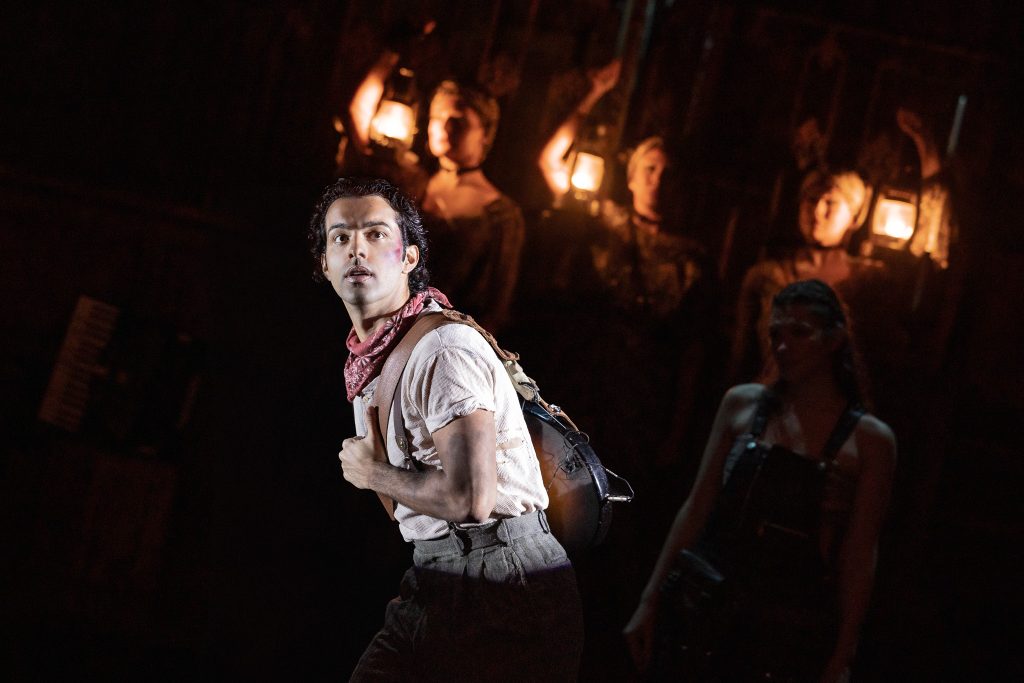
The Eccles Theater, with its modern design and amazing acoustics, proved to be an ideal setting for the show’s layered sound and visual storytelling. The space seemed to cradle the music, allowing every trumpet swell, guitar strum, and vocal harmony to land with clarity and emotional weight. It’s a venue that enhances rather than competes with a production like this, and Hadestown took full advantage.
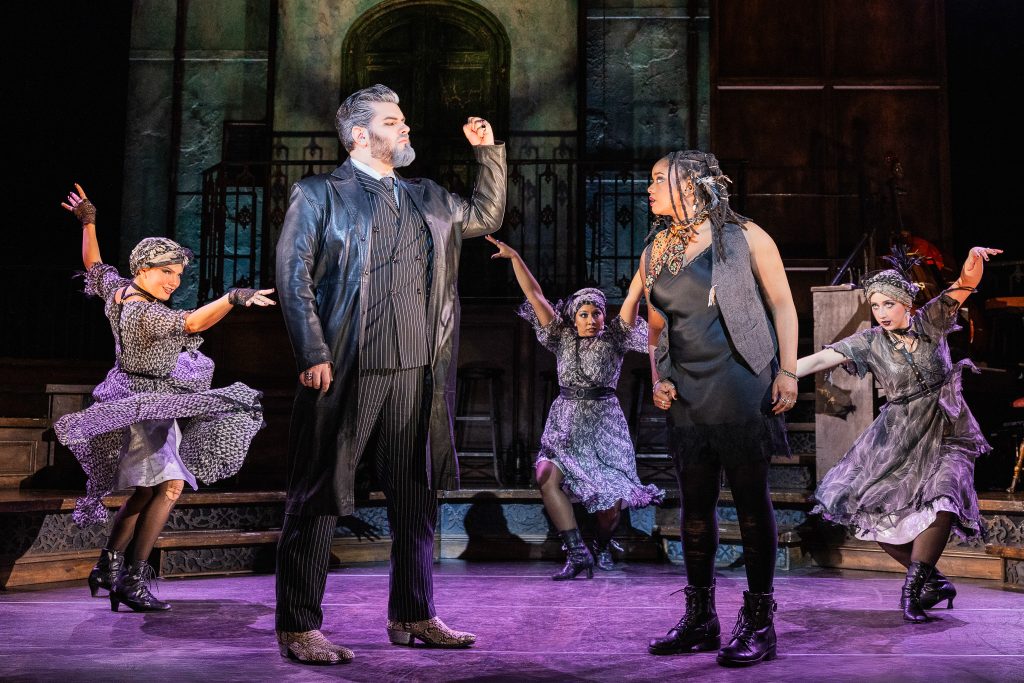
At its core, Hadestown is a retelling of the ancient Greek myth of Orpheus and Eurydice, but what makes this production so compelling is how grounded and human it feels. The story unfolds with a sense of inevitability, yet it never loses its urgency. Even if you know how it ends, the journey still feels fragile, as though hope might somehow rewrite fate this time around.
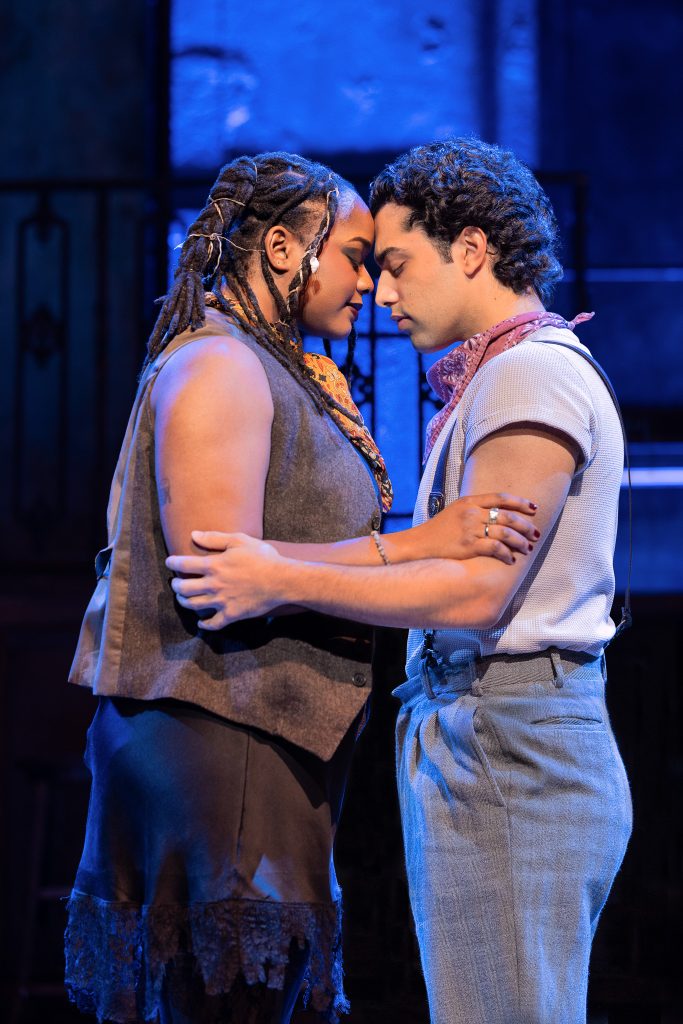
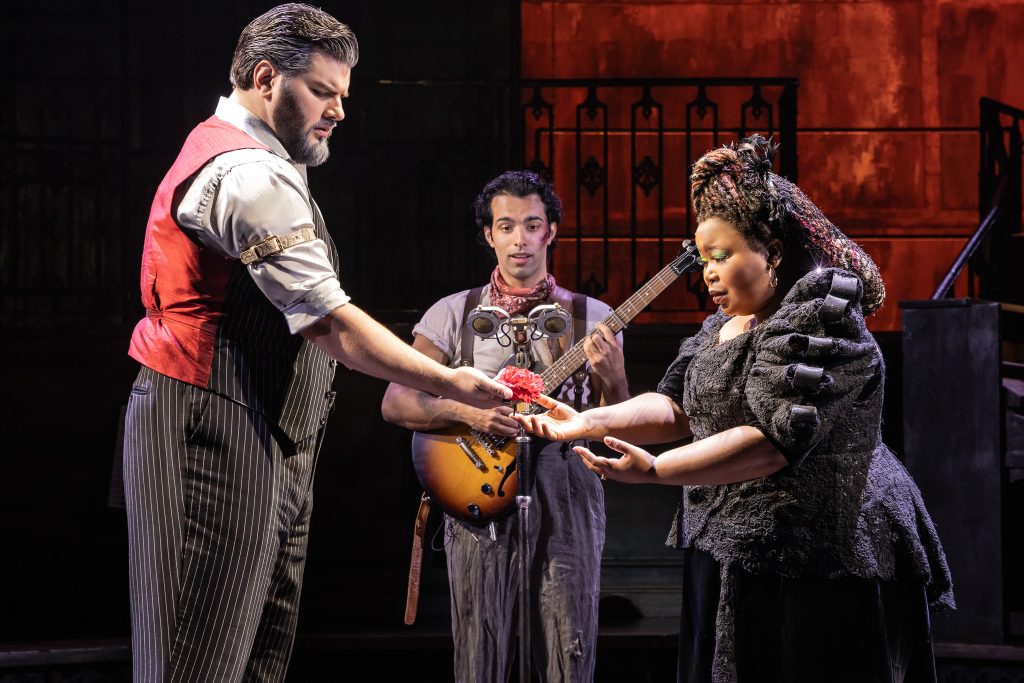
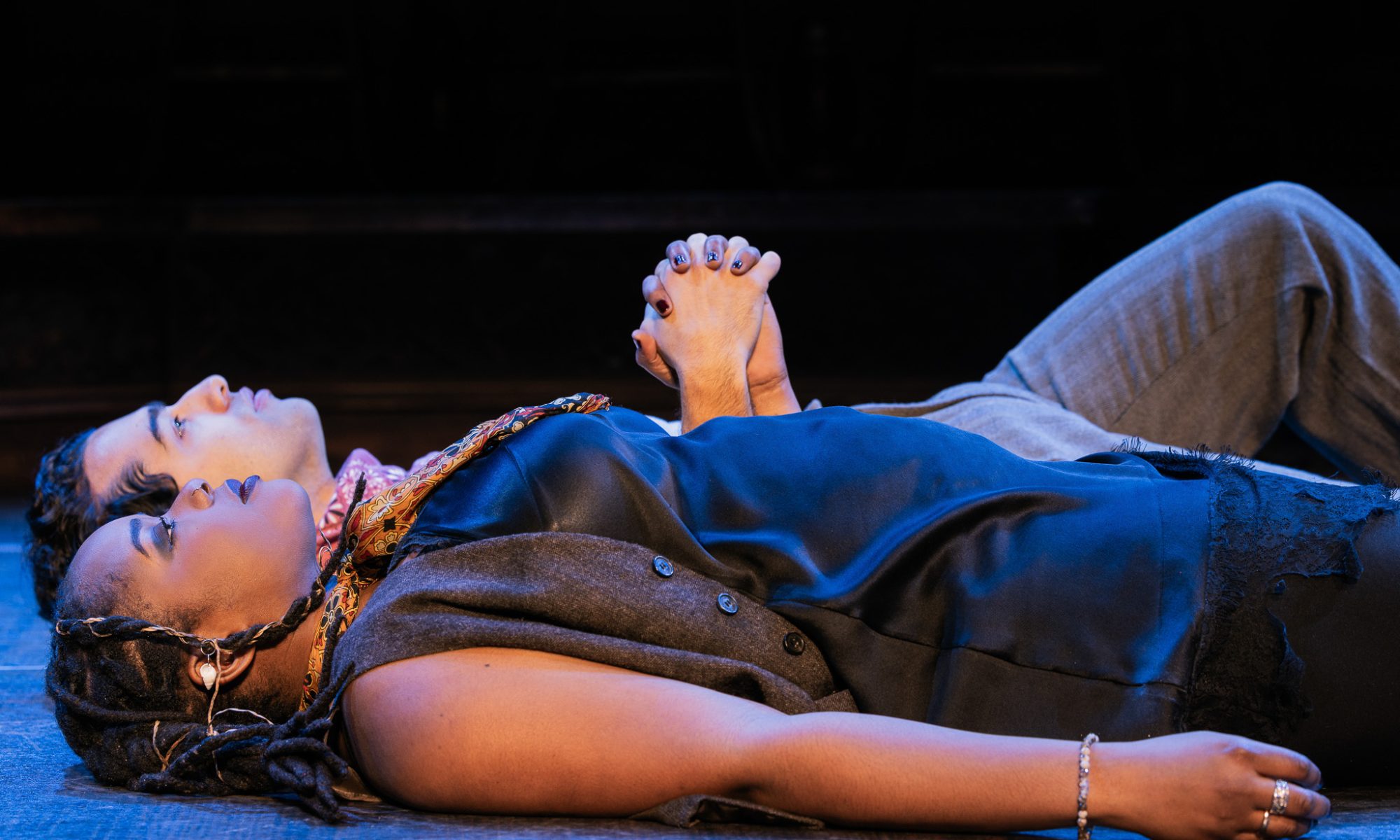
The touring cast delivered performances that felt deeply lived-in rather than overly polished. Orpheus, as played by Jose Contreras was portrayed with a delicate sincerity, his optimism teetering between inspiring and naive. Eurydice, played by Hawa Kamara, on the other hand, carried a quiet resilience that made her choices feel painfully real. Their chemistry wasn’t built on grand gestures but on subtle exchanges, glances, hesitations, and the weight of unspoken fear.
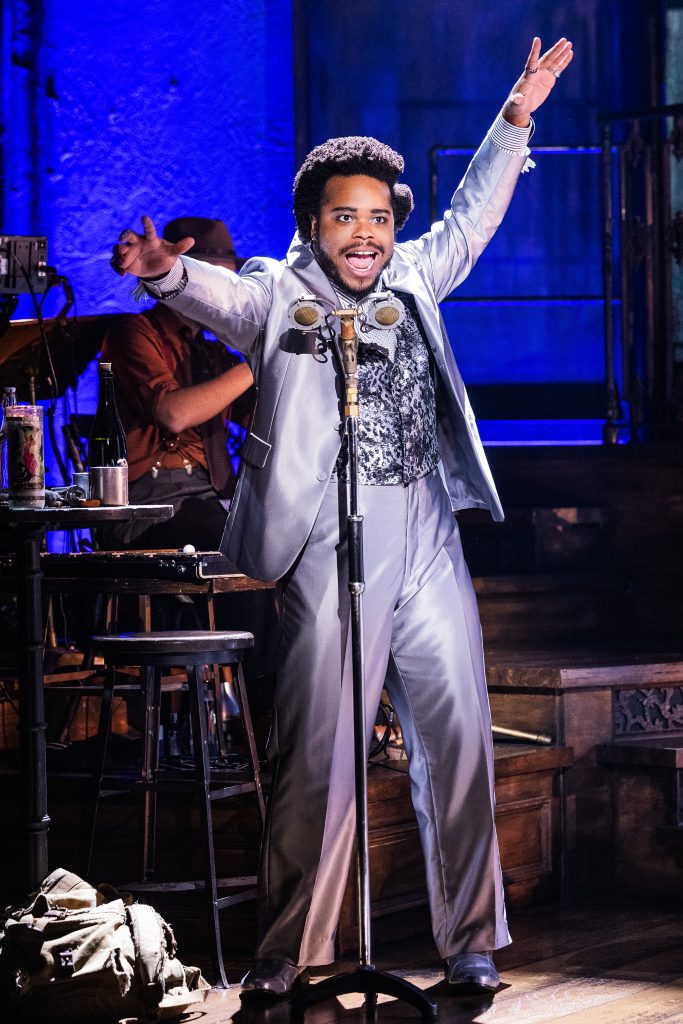
Another standout was Rudy Foster playing Hermes, who acted as both narrator and guide. With a commanding presence and effortless charisma, Hermes bridged the gap between audience and story, often breaking the fourth wall in a way that felt inviting rather than distracting. It’s a role that anchors the entire production, and here it was handled with precision and warmth.
Nickolaus Colón performed Hades in a way I had not seen. I’ve seen Hadestown before, but I don’t quite remember being as impacted by the character as I was with Colón’s portrayal. His stage presence and his subtle gestures captivated the audience. And his voice reverberated through the theater and within every ribcage. That powerful bass is no joke.
Namisa Mdlalose Bizana brought a much-welcomed levity and peaceful presence to the production. Her voice and her warmth brought a closeness between the actress and the audience. She was a crowd favorite for very understandable reasons.
Gia Keddy, Miriam Navarrete, and Jayna Wescoatt as the Fates pull off the remarkable responsibility of being ever-present and yet somehow rarely at the forefront. I could listen to the blend of their voices all day. They were perfectly cast. I found myself often focusing on their role in the show more than I needed to. I just couldn’t not pay attention to what they were doing. They are a necessary part of this beautiful musical.
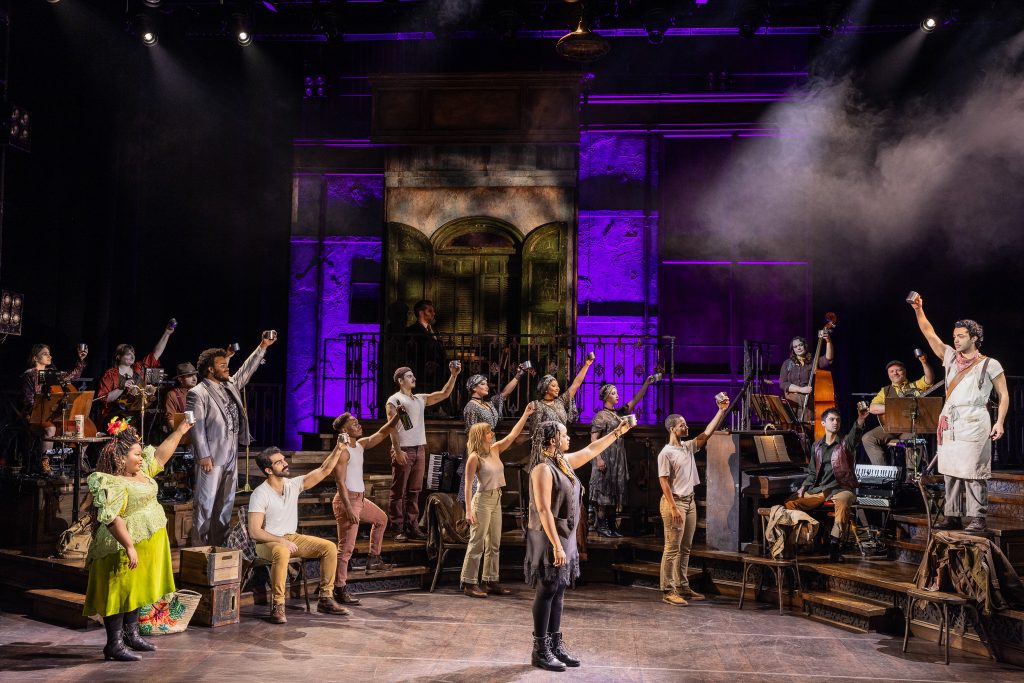
Visually, Hadestown remains one of the most distinctive productions on tour. The set is deceptively simple. Industrial elements and a few key props, but it transforms constantly through lighting and movement. Warm amber tones give way to stark, shadowy contrasts as the story descends into the underworld, creating a sense of scale without ever overwhelming the performers. The choreography is equally effective, blending stylized movement with naturalistic gestures to keep the world feeling cohesive.
Musically, the show is in a class of its own. The score blends folk, jazz, and blues into something that feels both timeless and contemporary. Songs don’t just punctuate the story; truly, they are the story. The band, visible onstage, becomes part of the narrative fabric, reinforcing the idea that this is a tale being told in real time, passed down like a legend. Haik Demirchain on the trumpet nearly steals the show on his own. What an amazing talent to have as part of this orchestra. The entire orchestra was phenomenal.
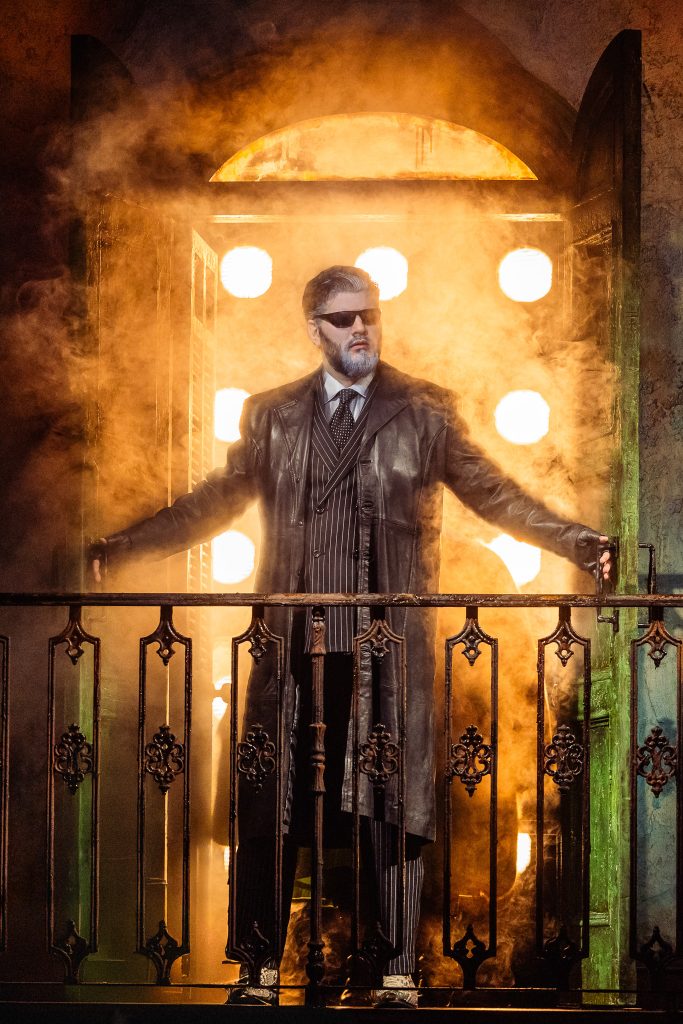
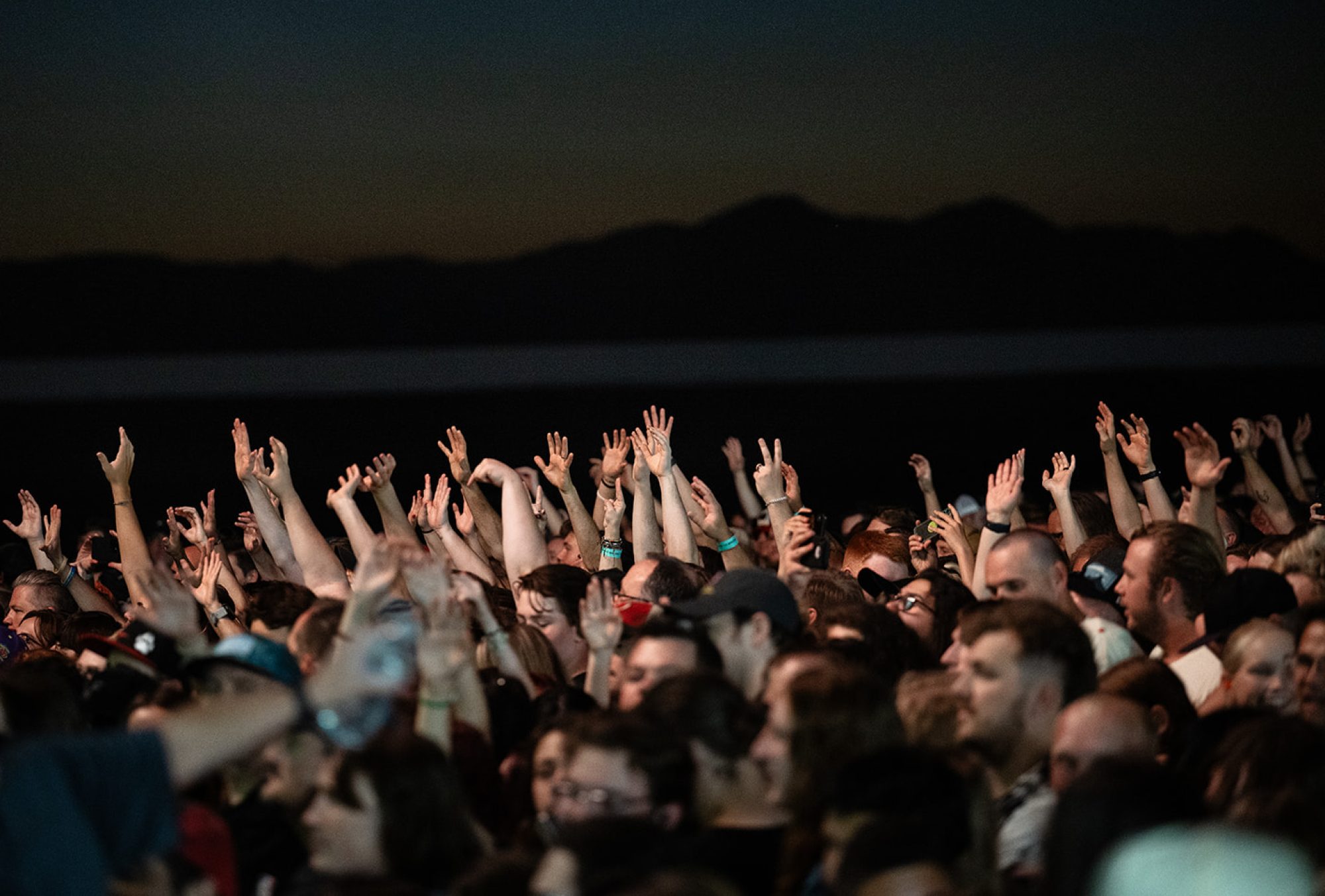
What makes this production linger long after the curtain call is its emotional resonance. Hadestown doesn’t rely on spectacle alone; it asks its audience to sit with difficult truths about love, sacrifice, and the cost of hope. The ending, famously bittersweet, landed with a quiet stillness in the theater. It was one of those rare moments where no one seemed eager to break the silence.
In Salt Lake City, Hadestown felt both grand and deeply personal, a testament to the power of storytelling when it’s handled with care and intention. It’s not just a show you watch, it’s one you feel, long after you’ve left your seat.